What do you work on?
Integrated photonics: light–matter interaction in III–V materials, nonlinear optics and quantum optics.
It is born, learns to travel, falls in love with a ring, changes colour, and finally lets go. My PhD research follows those moments on a chip: light–matter interaction, nonlinear optics and quantum optics.
Write to me →An electron meets a hole inside a thin layer of InGaN and gives up its energy as a photon of light. Spontaneous emission: any direction, its own phase. My master's thesis at EPFL asked why some of these meetings end in heat instead of light.
Between two mirrors, one photon stimulates an excited atom to release a twin: same colour, same phase, same direction. The twins multiply until a beam slips out through the far mirror. A laser.
Send it at two slits and it passes through both, as a wave, and interferes with itself. Yet it lands on the screen at one single point, as a particle. One photon at a time, the bright and dark fringes fill in.
In an optical fibre the glass is densest along the axis, so light drifting toward the edge is bent gently back to the centre, again and again, and never escapes. At 1550 nm it loses only about 0.2 dB per kilometre.
On a chip, a waveguide carries it past a microring. At resonance it couples in and circulates many times, and the light inside builds far brighter than the light that came in.
Bright enough, the material answers nonlinearly: two photons at ω merge into one at 2ω, half the wavelength. In my photonics minor we wrote the χ⁽²⁾ grating into silicon-rich nitride with light itself, by all-optical poling.
Run the process backwards and a single photon splits into a pair whose properties stay linked however far apart they fly. That is where quantum optics begins.
At a half-silvered mirror the photon takes both paths. Schrödinger imagined a cat sealed in a box with such a quantum trigger, alive and dead together until the lid is lifted. Measure, and only one answer remains.
In a photodetector the photon is absorbed and lifts an electron across the band gap. A small current flows, and that is how we know it was ever there.
Scroll to fly it: 6,404 km on the great circle from Lausanne to Toronto. Then the two cities up close.
Where the light began: EPFL, on the shore of Lac Léman.
One way, along the great circle, the shortest path a curved world allows.
Where it is shaped now: the University of Toronto, by Lake Ontario.
0 km
The two cities, up close
Research projects and teaching, oldest at the top.
Investigating orbital-angular-momentum modes in annular fibers as a medium for optical computing.
Designing and fabricating metasurfaces in the EPFL cleanroom, and building a point-of-care mid-IR readout.
All-optical poling of silicon-rich nitride waveguides for second-order nonlinear photonics, with Prof. Camille-Sophie Brès.
Non-radiative centres revealed by deep-level optical spectroscopy, with Prof. Nicolas Grandjean.
Light–matter interaction in III–V materials, nonlinear optics and quantum optics.
Lab and tutorial TA for ECE318 Fundamentals of Optics and ECE350 Semiconductor Electronic Devices; lab TA for ECE221, ECE231 and ECE212.
Awarded the Master of Science in Physics by EPFL.Now entitled to the title Physicien (Phys. dipl. EPF).
Started my PhD in photonics at the University of Toronto.
Defended my master's thesis.
Finished the photonics minor at EPFL.
Integrated photonics: light–matter interaction in III–V materials, nonlinear optics and quantum optics.
An MSc in Physics with a minor in Photonics at EPFL in Lausanne, before the PhD at the University of Toronto.
The efficiency of InGaN/GaN quantum wells, studied through the non-radiative centres that deep-level optical spectroscopy reveals.
Yes. I'm a lab and tutorial TA in Toronto's ECE department, including Fundamentals of Optics.
Email is best: jacob.hu@mail.utoronto.ca. I read every message.
Each visit to this page lands on the map as a point of light. Counted by ClustrMaps, which keeps only an approximate location, never who you are.
The visitor map is on its way
Photons pass a slit one by one and land almost at random, until the diffraction pattern shows. A career builds up the same way. Education, research, experience and skills below.
Open the PDF ↗Photonics in the Department of ECE. Study area: nonlinear optics, quantum optics and light–matter interaction.
Toronto, CanadaMajor in Physics, minor in Photonics. Thesis: Efficiency of InGaN/GaN quantum wells, investigation of non-radiative centres as revealed by DLOS.
Lausanne, SwitzerlandEach opens in full on the projects page.
Non-radiative centres revealed by deep-level optical spectroscopy, with Prof. Nicolas Grandjean.
All-optical poling for second-order nonlinear photonics, with Prof. Camille-Sophie Brès.
A compact mid-IR sensing setup for metasurface biosensors, with Prof. Hatice Altug.
Coupling orbital-angular-momentum beams into an OAM fibre for optical information processing.
Lab and tutorial TA for ECE318 Fundamentals of Optics and ECE350 Semiconductor Electronic Devices; lab TA for ECE212, ECE221 and ECE231.
Optical design with Zemax.
Zhihao Sun, Dexin Sun, Jinxin Hu, Philippe Traoré, Hong-Liang Yi, Jian Wu. Journal of Electrostatics 106, 103454 (2020).
光 · light · lumière · Licht
Four research projects from my master's at EPFL and three course labs. Each colour leaving the prism is one of them; hover a project to find its ray.
All-optical poling to write a χ⁽²⁾ grating into silicon-rich nitride waveguides.
Open the project →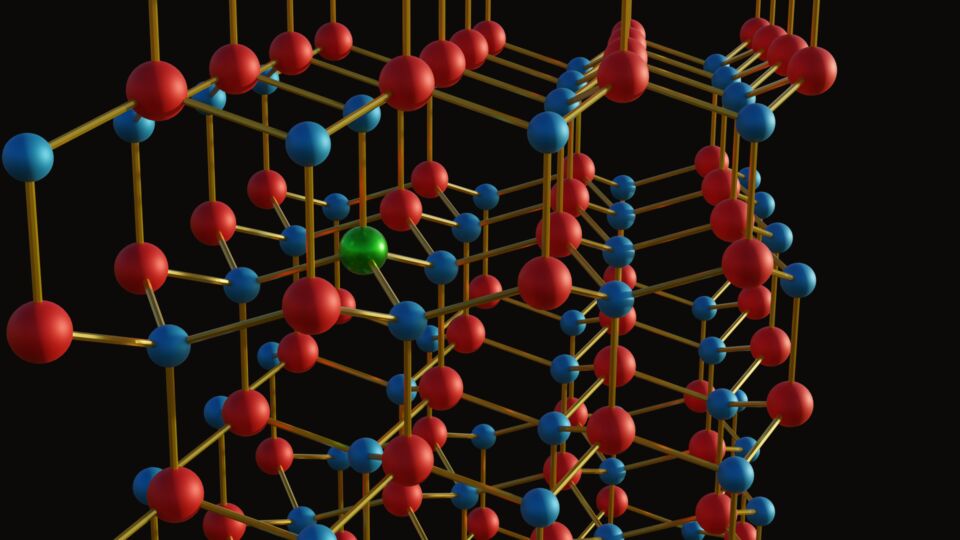
Hunting the point defects that turn light into heat, with deep-level optical spectroscopy.
Open the project →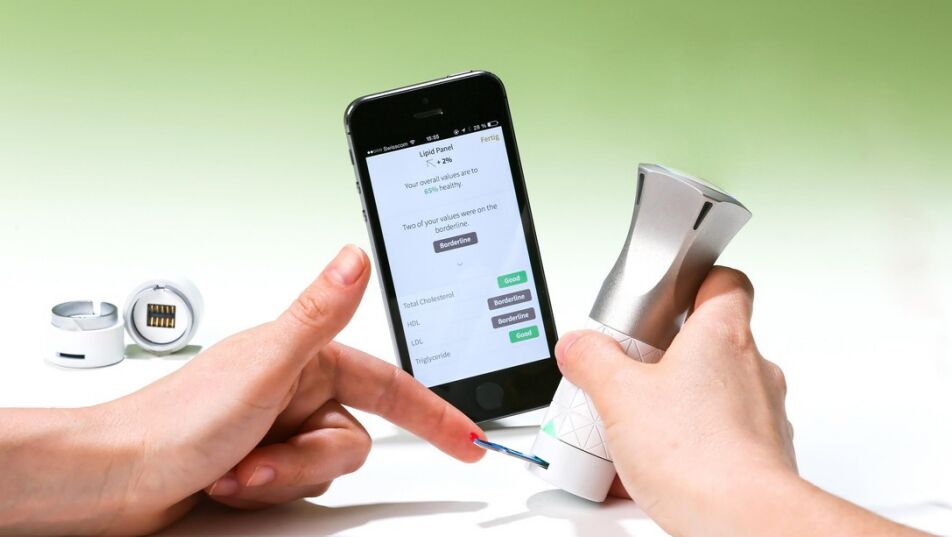
Bringing metasurface mid-IR sensing out of the lab with compact sources and detectors.
Open the project →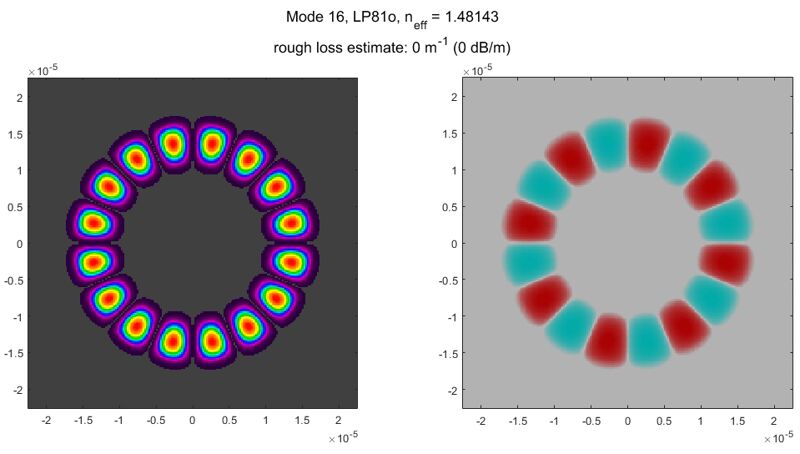
Coupling orbital-angular-momentum beams into an OAM fibre.
Open the project →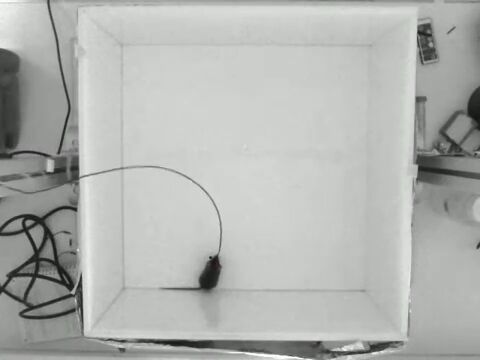
Tracking mouse head direction with deep learning in an optogenetics study.
Open the project →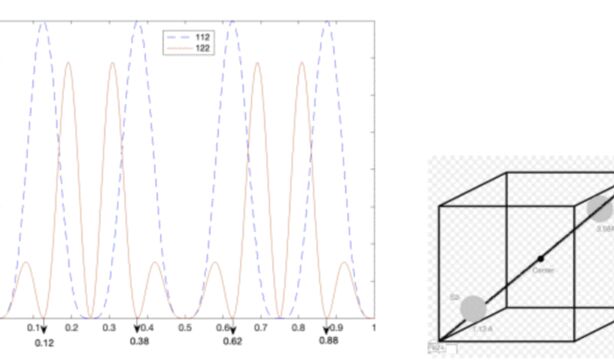
Determining the crystal structure of pyrite (FeS₂) by powder X-ray diffraction.
Open the project →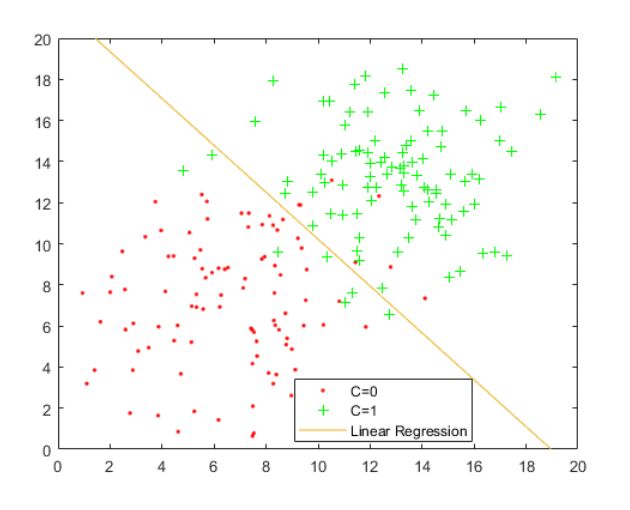
An automatic classification chain based on logistic regression.
Open the project →A single-photon detector clicks once for every photon it catches. These are the clicks so far, each placed at its real date.
Awarded my Master of Science in Physics by EPFL.From that day I could use the title Physicien (Phys. dipl. EPF).
Started my PhD in photonics at the Department of ECE, University of Toronto.
Defended my master's thesis.
Finished my photonics minor at EPFL.
Moved my website here from jacobstudio.top.I no longer run the old server and domain, so some of the original content did not make the move.
Five courses as a teaching assistant at the University of Toronto, and the courses that taught me along the way.
ECE212H1Circuit AnalysisWinter 2026Lab TAECE350H1Semiconductor Electronic Devices2025 – 26Lab & tutorial TAECE318H1Fundamentals of OpticsFall 2025Lab & tutorial TAECE231H1Introductory ElectronicsFall 2025Lab TAECE221H1Electric and Magnetic FieldsWinter 2025Lab TAWriting a second-order nonlinearity into glass, with light.
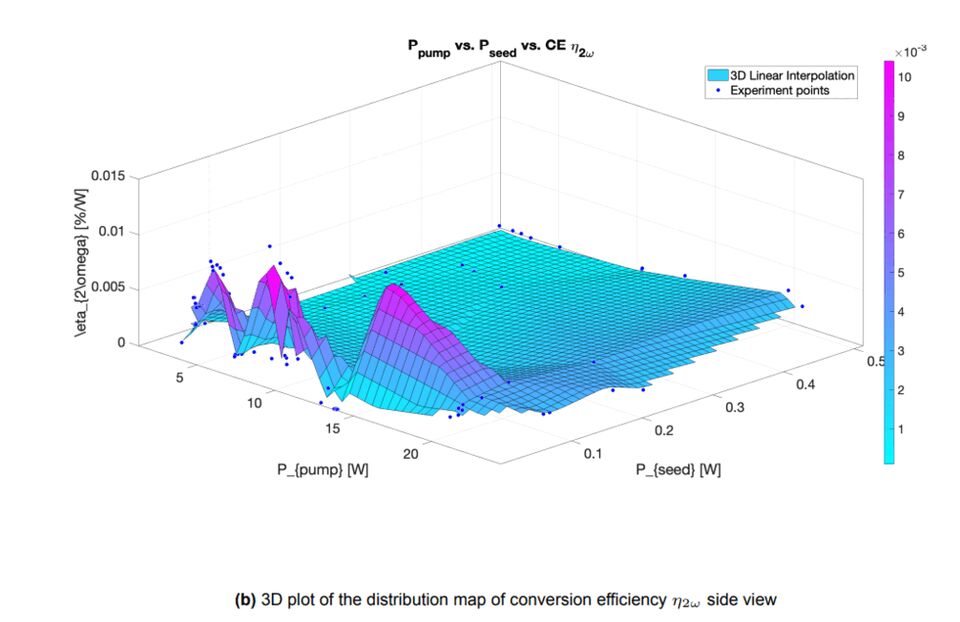
Demonstrating large second-order nonlinear effects in integrated platforms has been a widely pursued aim. All-optical poling of silicon-nitride (SiN) waveguides is a technique to induce second-order nonlinearities. Here, the pump and its phase-locked second harmonic generate a periodic photocurrent that satisfies the quasi-phase-matching condition, giving rise to a DC field and therefore a second-order susceptibility.
While generating photocurrent, these fields also increase the photoconductivity, leading to a complex interplay that governs the efficiency of these devices. The material constants had previously been extracted for stoichiometric silicon nitride. This project applied all-optical poling to silicon-rich silicon nitride waveguides; by the end of the project, the material properties were extracted and compared with stoichiometric silicon nitride.
Prof. Camille-Sophie Brès, Photonic Systems Laboratory (PHOSL), EPFL
Investigation of non-radiative centres as revealed by deep-level optical spectroscopy (DLOS).
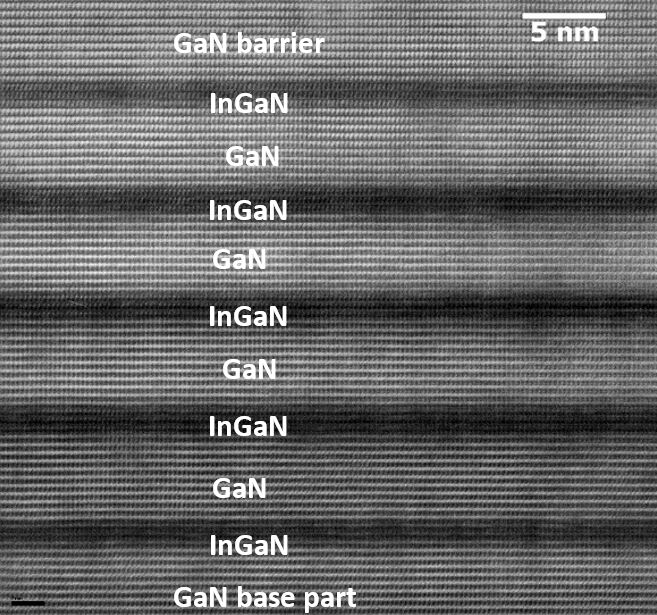
It is established that the efficiency of InGaN/GaN quantum wells (QWs) is mainly governed by the presence of point defects, whose origin is still unknown.
This project aimed to elucidate the origin of these deep traps by varying different parameters and combining characterisation techniques such as temperature- and power-dependent photoluminescence and deep-level spectroscopy.
Determining the energy of the traps relies on modelling the energy states of the quantum well.
Prof. Nicolas Grandjean, Laboratory of Advanced Semiconductors for Photonics and Electronics (LASPE), EPFL
Taking metasurface infrared sensing out of the lab and toward the point of care.
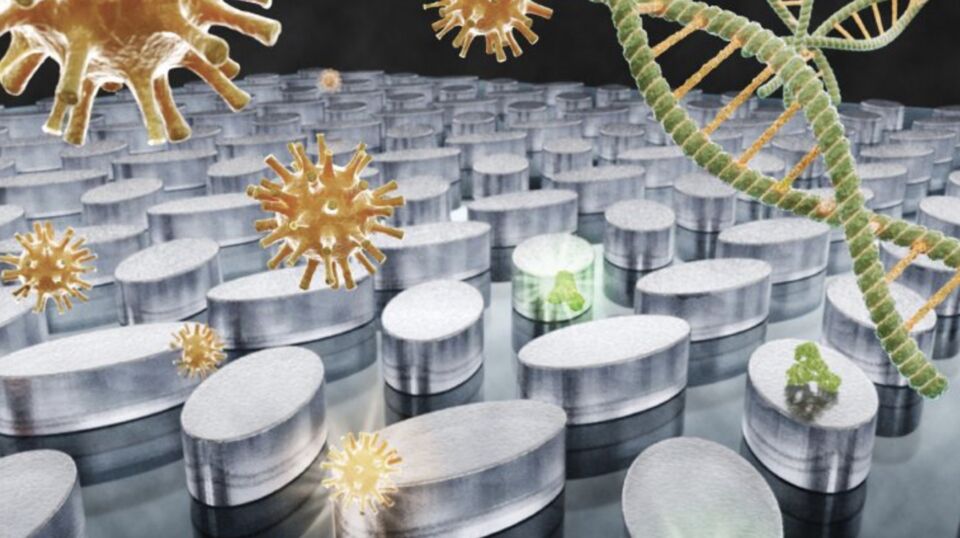
Demand for sensitive, fast characterisation of biological samples in healthcare and environmental monitoring is expected to grow. Photonic metasurfaces, two-dimensional metamaterials made of subwavelength nanoantennas, can focus mid-infrared light into nanoscale volumes, where the fields interact strongly with molecules and amplify their chemically specific infrared absorption. This label-free method is surface-enhanced infrared absorption spectroscopy. The next challenge is to remove the need for expensive, bulky instruments that do not suit on-site use.
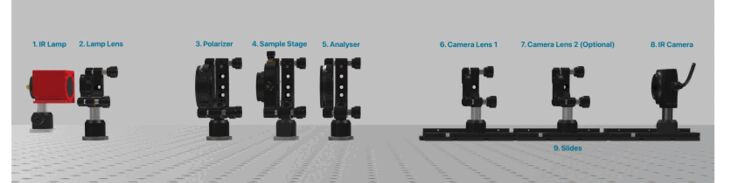
The project aimed to bring metasurface-based mid-IR sensors closer to real-world use with a lab-on-a-chip scheme built on low-cost, compact and readily available broadband mid-IR sources and detectors. Building the setup meant comparing optical configurations and components for the best overall performance, followed by sensing of relevant biological samples.
Prof. Hatice Altug, Felix Richter and Aleksandrs Leitis, Bionanophotonic Systems Laboratory (BIOS), EPFL
Light that carries a twist, used to process information at high speed.
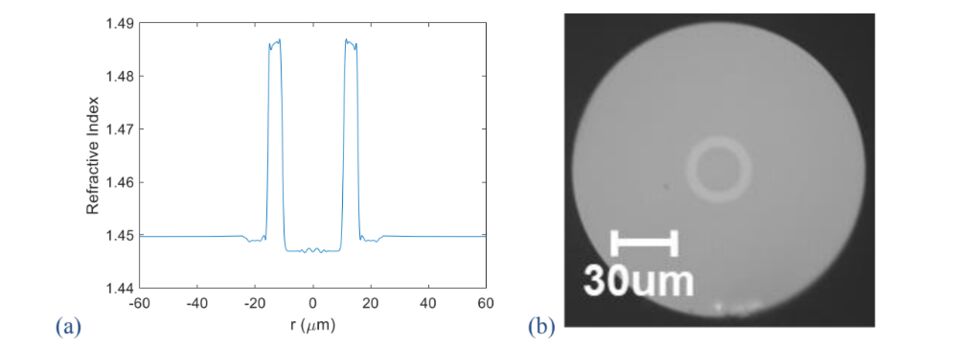
The objective was to build an optical platform to couple an orbital-angular-momentum (OAM) beam into an OAM fibre (Gen5A3) provided by Boston University. The project was motivated by the work of Uğur Teğin et al., who used fibres to process optical information at high speed instead of relying on heavy neuromorphic computing.
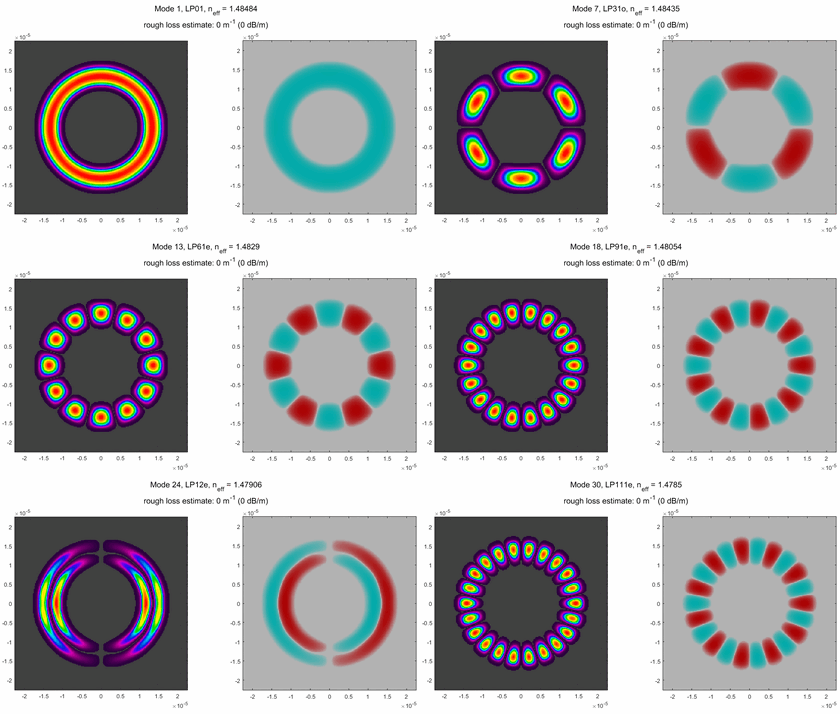
Tracking mouse head direction with deep learning in an optogenetics study.
Optogenetics, developed early this century, has become one of the biggest breakthroughs in neuroscience. In this project the researchers studied light activation of head-direction cells in mice: a viral vector made head-direction cells in the anterior dorsal thalamic nucleus express a light-sensitive ion channel (channelrhodopsin-2), so the cells could be activated by light while the mice were filmed.
We used the deep-learning software DeepLabCut, with MATLAB, to track specific body parts and follow head direction over time, and so determine how activating these cells with light changes the mouse's behaviour.
Determining the crystal structure of pyrite (FeS₂) by powder X-ray diffraction.
Radio-crystallography determines the structure of materials at the atomic scale: the lattice, the space group and the crystal structure, with a precision that depends on the material and the method. In this experiment we first worked out how to mount a mineral crystal in a powder XRD system, then determined the structure of pyrite from its diffraction pattern. The approach generalises to crystals other than pyrite.
An automatic classification chain based on logistic regression.
The aim was to implement an automatic classification chain based on logistic regression: inference of the model, learning of its parameters, experimentation and extension.